


[Robert Pirsig's writing, especially his second book, 'Lila: an Inquiry into Morals,' has given me a great deal of insight into many problems over the years--philosophical, political and personal. He has only two works, and is rarely interviewed. That's why I'm passing this on. --CarlD]
The interview: Robert Pirsig
The Seventies bestseller Zen and the Art of Motorcycle Maintenance was the biggest-selling philosophy book ever. But for the reclusive author life was bitter-sweet. Here, he talks frankly about anxiety, depression, the death of his son and the road trip that inspired a classic. Interviewed by Tim Adams November 19, 2006
UK Observer /Guardian Unlimited
The article summarizing the interview
At 78, Robert Pirsig, probably the most widely read philosopher alive, can look back on many ideas of himself. There is the nine-year-old-boy with the off-the-scale IQ of 170, trying to work out how to connect with his classmates in Minnesota. There is the young GI in Korea picking up a curiosity for Buddhism while helping the locals with their English. There is the radical, manic teacher in Montana making his freshmen sweat over a definition of 'quality'. There is the homicidal husband sectioned into a course of electric-shock treatment designed to remove all traces of his past. There is the broken-down father trying to bond with his son on a road trip. There is the best-selling author of Zen and the Art of Motorcycle Maintenance, offering solutions to the anxieties of a generation. And there is, for a good many years, the reclusive yachtsman, trying to steer a course away from cultish fame.
Pirsig doesn't do interviews, as a rule; he claims this one will be his last. He got spooked early on. 'In the first week after I wrote Zen I gave maybe 35,' he says, in his low, quick-fire Midwestern voice, from behind his sailor's beard. 'I found it very unsettling. I was walking by the post office near home and I thought I could hear voices, including my own. I had a history of mental illness, and I thought: it's happening again. Then I realised it was the radio broadcast of an interview I'd done. At that point I took a camper van up into the mountains and started to write Lila, my second book.'
It is that second book, recently republished, that has prompted him to talk to me now. He sits in a hotel room in Boston and tries, not for the first time, to make some sense of his life. He is, he suggests, always in a double bind. 'It is not good to talk about Zen because Zen is nothingness ... If you talk about it you are always lying, and if you don't talk about it no one knows it is there.' Generally, rather than analysing, he says, he would rather 'just enjoy watching the wind blow through the trees'. Reclusion has its discontents, however. 'In this country someone who sits around and does that is at the bottom of the ladder, but in Japan, say, someone who goes up into the mountains is accorded great respect.' He pauses, laughs. 'I guess I fall somewhere in between.'
Ever since I first read Pirsig's motorbike quest for meaning, when I was about 14, I've been curious to imagine its author. Part of the compulsion of that book, which has sold more than five million copies, is the sense of autobiographical mysteries that remain unexplained. While Pirsig's narrator tries to marry the spirit of the Buddha with western consumerism, discovers the godhead in his toolkit, and intuits a sense of purposive quality independent of subjects and objects, he also constructs a fragmentary picture of his own past. His pre-shock-treatment former self, the ghostly Phaedrus, haunts his travels across the Midwest.
'What I am,' he writes at one point, 'is a heretic who's recanted and thereby in everyone's eyes saved his soul. Everyone's eyes but one, who knows deep down inside that all he has saved is his skin.' My 14-year-old self double-underlined this and put two Biro exclamation marks in the margin. Twenty-six years, and several revisionist readings of the book later, I'm still wondering what Pirsig thinks of when he thinks of himself.
He suggests a lot of that idea still goes back to his childhood as a disaffected prodigy. He says that ever since he could think he had an overwhelming desire to have a theory that explained everything. As a young man - he was at university at 15 studying chemistry - he thought the answer might lie in science, but he quickly lost that faith. 'Science could not teach me how to understand girls sitting in my class, even.'
He went to search elsewhere. After the army he majored in philosophy and persuaded his tutor to help him get a place on a course in Indian mysticism at Benares, where he found more questions than answers. He wound up back home, married, drifting between Mexico and the States, writing technical manuals and ads for the mortuary cosmetics industry. It was when he picked up philosophy again in Montana, and started teaching, that Phaedrus and his desire for truth overtook Pirsig once more.
At that time, he recalls, in his early thirties, he was so full of anxiety that he would often be physically sick before each class he taught. He used his students to help him discover some of the ideas that make up what he calls the 'metaphysics of quality' in his books, the ideas that led him to believe that he had bridged the chasm between Eastern and Western thought. No two classes were the same. He made his students crazy by refusing to grade them, then he had them grade each other. He suggests that by the end of each term they were so euphoric that if he had told them to jump out of the window they would have done. The president of the university gave a speech, and he contradicted him in the middle of it by shouting: 'This school has no quality.' He saw clearly how American society was disconnected from life and he believed he could help it connect. He was reading Kerouac, and trying to live in truth.
Alongside that, I say, as he describes that time with some fervour, I guess there was some depression setting in? 'Well,' he says, 'there was fear. All these ideas were coming in to me too fast. There are crackpots with crazy ideas all over the world, and what evidence was I giving that I was not one of them?'
Such evidence proved harder and harder to present. One day in the car with his six-year-old son Chris, his mind buzzing, Pirsig stopped at a junction and literally did not know which way to turn. He had to ask his son to guide him home. What followed was the point where he either found enlightenment, or went insane, depending on how you look at it (really the root of all the questions in his first book).
'I could not sleep and I could not stay awake,' he recalls. 'I just sat there cross-legged in the room for three days. All sorts of volitions started to go away. My wife started getting upset at me sitting there, got a little insulting. Pain disappeared, cigarettes burned down in my fingers ...'
It was like a monastic experience?
'Yes, but then a kind of chaos set in. Suddenly I realised that the person who had come this far was about to expire. I was terrified, and curious as to what was coming. I felt so sorry for this guy I was leaving behind. It was a separation. This is described in the psychiatric canon as catatonic schizophrenia. It is cited in the Zen Buddhist canon as hard enlightenment. I have never insisted on either - in fact I switch back and forth depending on who I am talking to.'
Midwestern American society of 1960 took the psychiatrist's view. Pirsig was treated at a mental institution, the first of many visits. Looking back, he suggests he was just a man outside his time. 'It was a contest, I believe, between these ideas I had and what I see as the cultural immune system. When somebody goes outside the cultural norms, the culture has to protect itself.'
That immune system left him with no job and no future in philosophy; his wife was mad at him, they had two small kids, he was 34 and in tears all day. Did he think of it at the time as a Zen experience?
'Not really. Though the meditation I have done since takes you to a similar place. If you stare at a wall from four in the morning till nine at night and you do that for a week, you are getting pretty close to nothingness. And you get a lot of opportunities for staring in an asylum.'
When he was released, it only got worse. He was crazier; he pointed a gun at someone, he won't say who. He was committed by a court and underwent comprehensive shock treatment of the kind described by Ken Kesey in One Flew Over the Cuckoo's Nest
I wonder if he remembers the mechanics of it?
'Well they put a little rubber thing in your mouth and then they gave a drug like curare, used by South American Indians in their darts. It stops your lungs before it stops your mind. Before you go under you had a feeling like you were drowning. I woke up one time and I thought: where the hell am I? I had a feeling I was in my Aunt Flossie's house, which I had liked as a child. I thought I must have passed out drunk.' He laughs. 'This was after the 14th treatment I think.'
When his wife came to see him he knew something was wrong but he did not know what it was. A nurse started to cry because she knew that his wife had divorced him while he had been in hospital. 'The funny thing about insane people,' he says, 'is that it is kind of the opposite of being a celebrity. Nobody envies you.'
Pirsig was able to keep a tenuous grip on his former self, despite the treatment. He figured that if he told anyone he was in fact an enlightened Zen disciple, they would lock him up for 50 years. So he worked out a new strategy of getting his ideas across. He embarked on a book based on a motorcycle ride he made with his son, Chris, from Minnesota to the Dakotas in 1968. 'It was a compulsive thing. It started out of a little essay. I wanted to write about motorcycling because I was having such fun doing it, and it grew organically from there.'
When the book came out, in 1974, edited down from 800,000 words, and having been turned down by 121 publishers, it seemed immediately to catch the need of the time. George Steiner in the New Yorker likened it to Moby Dick. Robert Redford tried to buy the film rights (Pirsig refused). It has since taken on a life of its own, and though parts feel dated, its quest for meaning still seems urgent. For Pirsig, however, it has become a tragic book in some ways. At the heart of it was his relationship with his son, Chris, then 12, who himself, unsettled by his father's mania, seemed close to a breakdown. In 1979, aged 22, Chris was stabbed and killed by a mugger as he came out of the Zen Centre in San Francisco. Subsequent copies of the book have carried a moving afterword by Pirsig. 'I think about him, have dreams about him, miss him still,' he says now. 'He wasn't a perfect kid, he did a lot of things wrong, but he was my son ...'
I ask what Chris thought of the book, and Pirsig's face strains a little.
'He didn't like it. He said, "Dad, I had a good time on that trip. It was all false." It threw him terribly. There is stuff I can't talk about still. Katagiri Roshi, who helped me set up the Zen Centre in Minnesota, took him in hand in San Francisco. When Katagiri gave Chris's funeral address tears were just running down his face. He suffered almost more than I did.'
When his son died, Pirsig was in England. He had sailed across the Atlantic with his second wife, Wendy Kimball, 22 years his junior, whom he had met when she had come to interview him on his boat. She has never disembarked. He was working at the time on Lila, the sequel to his first book, which further examines Phaedrus's ideas in the context of a voyage along the Hudson, with Lila, a raddled Siren, as crew.
The book is bleaker, messier than Zen and the Art of Motorcycle Maintenance, though it carries a lot of the charge of Pirsig's restless mind. 'If I wrote it today,' he says, 'it would be a much more cheerful book. But I was resolving things in Lila; the sadness of the past, and particularly Chris's death, is there. Zen was quite an inspiring book, I think, but I wanted to go in the other direction with Lila and do something that explored a more sordid, depressing life ...'
He hoped Lila would force the 'metaphysics of quality' from the New Age shelves to the philosophy ones, but that has not happened. Though a website dedicated to his ideas boasts 50,000 posts, and there have been outposts of academic interest, he is disappointed that his books have not had more mainstream attention. 'Most academic philosophers ignore it, or badmouth it quietly, and I wondered why that was. I suspect it may have something to do with my insistence that "quality" can not be defined,' he says.
This desire to be incorporated in a philosophy canon seems odd anyhow, since the power of Pirsig's books lie in their dynamic personal quest for value, rather than any fixed statement of it. But maybe eventually every iconoclast wants to be accepted.
He still sails. He lives in rural New England and has just been up to the islands of Maine with his wife on the same boat that he describes in Lila - perfectly maintained, of course. He lives these days in cyberspace, he says, where his ideas circulate. He plans to learn to tango, and visit Buenos Aires. He's just discovered YouTube. He doesn't write any more, though, and he hardly reads. I wonder if that old depression ever returns?
'I've been hit with it lately,' he says. 'It did not seem related to my life in any way. I have money, fame, a happy wife, our daughter Nell. But I did for the first time go to a psychiatrist. He said it's a chemical imbalance and he prescribed some pills and the depression has gone.'
Otherwise, he says, he tries to live as best he can to the dictates of 'his dharma': to stay centred. I ask if he fears death.
'I'm not depressed about it,' he says. 'If you read the 101 Zen Stories you will see that is characteristic. I really don't mind dying because I figure I haven't wasted this life. Up until my first book was published I had all this potential, people would say, and I screwed up. After it, I could say: No, I didn't screw up.'
He smiles. 'It was just that I was listening to a different drummer all along.'
*****
The Interview: Part 1
TA: You stopped doing interviews for a long time. Why have you started again?
RP: Well, this may be the last one. [laughs] I turned down a lot of things. This may well be my very last one. Part of it is just laziness. When I first wrote Zen and the Art of Motorcycle Maintenance I was completely innocent. Even though our local senator Eugene McCarthy said 'reporters are like blackbirds - when one comes and sits on a wire, 50 come and sit next to him'. In the first week after I wrote Zen I gave maybe 35 [interviews], though. I found it very unsettling. There's a funny story. I was walking by the post office near home and I thought I could hear voices, including my own. I had a history of mental illness, and I thought: It's happening again. Then I realised it was the radio broadcast of an interview I'd done. At that point I took an RV, [camper van], up into the mountains and started to write Lila, my second book. Another reason for reclusion is that I like the ideas to generate their own momentum. But that is a little dangerous because they can sink into oblivion if you are not careful.
TA: I imagine the internet, the sites devoted to your books and so on, helps to keep things current?
RP: The internet is what saved Lila. Anthony McWatt [a lecturer in philosophy at Liverpool University who has championed Pirsig] is the one person who has a PhD in my work. He has had to face a huge amount of academic hostility. He first wrote to me with a masters paper he wrote. It wasn't right, but he said something in it about the fact that someone had written something that made his stomach hurt. I thought: that's a true philosopher...
TA: A gut reaction...
RP: Exactly. He kept asking me questions year after year. It took him 12 years to complete his PhD, and during that time he would teach classes, and he would email me a question and I'd send him an answer. So he had absolute authority for a statement. [laughs]
TA: You must have had a lot of interest over the years, from people wanting to adapt the book and so on?
RP: I had a lot of film offers. Robert Redford made three different offers. But they insist on the right to change anything they please without asking me. I told Wendy [Pirsig's wife] she should sell it as soon as I die. I'm 78 now: someone might as well make some money from it. Redford I talked to twice. He's a brilliant guy. I liked him personally. I liked his liberalism. [pauses] You saw the [midterms] election result this morning? I think the world will be much happier place...
TA: I understand you were away last week, sailing. Do you still take the boat out a lot?
RP: We sailed this summer up into the islands of Maine. Very rocky and a lot of fog. It's the same old boat I describe in Lila - 32 years old now and in better shape than when I bought it. I modified a few things. It's a Norwegian boat, a double-ender. It is famous for its ability to survive storms. We survived the Fastnet storm in 1979, when 15 people died. We got through without any trouble, though we were scared to death. I look after it well. I figure if you are going to write a book on maintenance, you better do something!
TA: I guess it is in some ways the ultimate 'dynamic of quality', sailing - everything changing minute by minute?
RP: Yes everything is always moving. Our GPS quit last time.
TA: You were back on the stars...?
RP: Not quite. In the end I managed to rig something up with the computer. There is something about the sea, I can't be away from it too long. It's like the old Masefield poem [Sea Fever, which begins 'I must go down to the seas again']. It's to do with the fact no one owns it. And if you get out of the sight of land, something happens.
TA: You have crossed the Atlantic a few times?
RP: We went over to England from St Pierre in Newfoundland. After 21 days we arrived at the Isles of Scilly and stayed in Falmouth for the winter. This was 1979. Then our visa expired and we went to the Netherlands. Our daughter was born there and they kicked us out. So we went to Norway for a while, then Sweden. We had not much money then. Then Nell got a bit big for the boat. She was having trouble in school because everyone spoke Swedish. We sailed back through Denmark and into the canals of Germany. At one point, I will never forget, we were in Belgium at Liege, there was an English barge behind us and Nell got off and a little girl got off this barge and started speaking to her in English and Nell took her hands and would not let her go. She was about three and it was the first time she had met someone her own age whom she could understand. I thought then it was time to come home. So we took off through the canals to France, I didn't want Nell to cross the Atlantic, too dangerous, so she flew back with Wendy and a couple of friends helped me to get to the Caribbean.
TA: Did you keep a journal of all that? Do you write one now?
RP: I didn't but Wendy did. She still does write. I can't predict what Wendy will do when I am gone. But I am 22 years older than she is; when I met her I was on the boat. She was a newspaper reporter and wanted to interview me, so I said: Why don't you stay for a while? She's still here. So I guess she will write the authoritative biography. She knows everything. [laughs] We have had a wonderful time together.
TA: What about archive material for the books. It sounds in Lila that you were an obsessive note-taker?
RP: I took notes on Zen before I started to make the trip. I'm not sure now what I wrote on the trip but as soon as I got back I made these slips that I described at the beginning of Lila. I could recall it all very clearly.
TA: Have you ever retraced the journey?
RP: Not all the way through, but we have travelled those roads. The BBC did a trip there recently. A woman called Karen Whiteside wanted to do some films about the book. She came to Liverpool where we had a conference about the 'Metaphysics of Quality'.
TA: I read about it. It sounds like it was quite a special experience for you in Liverpool, the first academic conference dedicated to the books.
RP: It was. And Liverpool felt like a very dynamic town.
TA: It's like the wild west up there.
RP: That's right. We were just whisked along. I come from a working man's town, Minneapolis, so I felt right at home there, more so than in London.
TA: Are you surprised that there hasn't been similar academic attention to your work in America?
RP: Americans tend to be always just interested in the latest thing. The philosophic calibre of the British is way ahead of America, I think. When George Bush was asked who was the greatest philosopher in the world he said: Jesus Christ. Right there I thought: 'My God, we are going to need Jesus Christ if this guy gets elected!'
TA: It's a strange time to be American. Everything seems to be so polarised.
RP: It's a version of the old capital-versus-labour dispute, I guess. The Democrats, Al Gore, would have won without Lewinsky I think. I had a lot of time for Clinton but I still fault him for a lot of the stuff that has followed.
TA: Have your politics changed over the years?
RP: I have been a lifelong Democrat. I was born in the state of Hubert Humphrey who was, I believe, one of the most intelligent people ever to get into politics. My girlfriend lived across the street from him and I would see him from time to time. Speak to him. Like all ideas, though, the Democrat ideas need to be dynamic. It's like Lila, it needs to be kept current.
TA: Alma Books feels like a good publisher for it, small, dedicated.
RP: It is exactly the kind of publisher this book needs, it needs a niche. It looks beautiful too. They are perfectionists, and they are very serious about it. I want someone who can hold on to it for 20 years.
TA: I have the sense you think the book has been neglected by philosophers.
RP: Well, I have never seen a fatal argument against the Metaphysics of Quality. Most academic philosophers ignore it, or badmouth it quietly and I wondered why that was. I suspect it may have something to do with my insistence that Quality not be defined. I was asked recently to write a preface to a book on Plato. I remembered a quote from Alfred North Whitehead which read: 'The first thing you can learn about western philosophy is that it is all footnotes to Plato.' MoQ was not that. Plato and Socrates insisted on all terms being defined. If you start with a term that is undefined, like quality, it is no longer a footnote to Plato.
TA: I read your email conversation with Julian Baggini [for the Philosophy Magazine]. His line of questioning was pretty hostile.
RP: Some people saw it as an ambush. At first I thought he was just talking about the negative stuff so he could get to the positive stuff, but then I realised he wasn't ever going to get there. [laughs] Finally when he brought up that hoax paper [that was presented in Liverpool] I realised where he was going. He thought he was superior to the MoQ, I guess.
TA: It seemed to me odd to take on the philosophy in that way, suggesting that you hadn't read enough philosophy to be a philosopher. Your books seemed so clearly about a personal journey, more a quest than a statement, kind of one man against the world.
RP: Well, yes. Then the only question is: Where have I said anything that is untrue? Baggini jumped on a statement I had made about evolution, out of long chapter, about knowing the 'how' of things and not the 'why', and so on. I felt that I had answered that. I figured to start with he was devil's advocate, but then by the end I wasn't sure about the advocate part. I read a couple of his books, which were beautifully clearly written. He is doing really dynamic stuff. I have a lot of respect for him, even though he doesn't seem to have much for me. I would say he is typical of a lot of academic philosophers. They think: Here's this guy who doesn't even have an MA in philosophy, and he has written what they call a 'New Age' book, and the bias comes.
TA: Do you get invited to lecture at all?
RP: I don't do it. One of the reasons is I have always had a shyness. It doesn't sound like it now because once I start talking to someone I get going. But before I go on stage I have no sleep the night before, and it is just such and ordeal for me. That used to happen when I was teaching. I used to actually get so tense and nervous before I taught class that I would throw up beforehand. For the first few weeks of every quarter it was terrible, but by the end we had all gotten so close nobody wanted to leave.
TA: Are you still in touch with those pupils from back then?
RP: No I really am a recluse. I just enjoy watching the wind blow through the trees. In this country someone who sits around and does that is at the bottom of the ladder, but in Japan, say, someone who goes up into the mountains is accorded great respect. [laughs] I guess I am somewhere in between. I enjoy reclusion: it clears my mind. I don't think I could have written these books without it. People said: Why don't you go around and talk to other philosophers? To me that's not philosophy. It is like literary criticism. A real writer, like Hemingway, doesn't cast around for opinions, he goes off fishing somewhere, starts calming down. He said: 'I turn my flame down and down and down and down until it explodes.'
TA: You must miss the synthesising process of writing, the getting of things clear in your head.
RP: I'm still synthesising all the time. Wendy and I take a drive every morning. We don't want to lose track of each other, which can happen in a marriage that has lasted 30 years. So we make it a rule that we go driving around for a couple of hours each morning, just talking over every possible thing we can think of. You've got to keep close to your spouse I think, which is a very hard thing to do in America, with everything always pulling you away. I would advise all married people to spend two hours talking to each other. That's my moral for the day.
TA: When you look back on childhood now, does it seem like another life?
RP: It was a strange life. You saw my IQ? [170 aged 9] I didn't learn about that until I was 32. I just thought I was kind of a bad kid; I didn't relate to people at all. I was kind of a sissy at first, in a playground situation, and the kid who is scared is the one the bullies go after. I used to get beat up pretty badly. When I was five I was put up a couple of years and everyone was seven or eight and much bigger than I was. And the teacher made me write with my right hand, though I was left handed, to stop me smudging the page. I started to stammer. Fortunately the University of Minnesota, where my father taught, had one of the top psychology departments in the world. Someone there told him that the speech centres of the brain are all on one side, and if you are forced to use the wrong hand to do things it throws all that out. By then it had created a stammer so bad I could hardly get a word out. This professor went to the school and presented this to the teacher, and I was allowed to use my left hand and my stammer disappeared in a month.
TA: This was at Blake school?
RP: No that came later. That was what you would call a private school. Of my class in that school more than half went to Harvard. I did well there, was head of the class. The senior school was too far away however so I then went from this high-discipline school to a place where it was extremely liberal. Looking back I respect the discipline much more. Education should not be fun. You are being brought up into society and society has a way of doing things. It may not be pleasant but sooner or later you are going to have to do it anyway. These Blake kids knew how to discipline themselves, and so they could learn.
TA: I remember a great teacher of mine reading Zen to us in class. Did you have life-changing teachers?
RP: Well, no, I never had anyone I felt subordinate to.
TA: You were a self-contained child? Intense?
RP: The bullying forced me into my own world. I thought: They don't like me but I am going to do my own thing. I felt kind of Jewish, if that's not politically incorrect.
TA: You write in Lila of the famous prodigy William James Sidis. It sounds like you had a lot of sympathy for him?
RP: I knew what he went through certainly. They said he was burned out but he wasn't burned out he was just sick and tired of being a prodigy. He started taking jobs where no one knew who he was. After he graduated from Harvard [aged 16] he went to teach in Texas - a big mistake, because the culture was so hostile, and he was really oblivious to society. He didn't bathe, he started to smell, and got fat. They all took him out and scrubbed him down. I read one of his books - brilliant - on the Native Americans. I knew the kind of loneliness he felt. When someone comes up to you as a celebrity you feel that kind of loneliness too. I said something in Lila: 'They love you for being what they all want to be, but they hate you for being what they are not.' That's why I don't get involved too much. No one bothers me in New England. Our state motto is: Leave me Alone. [laughs] Robert Frost delivers the ethos very well: Good fences make good neighbours.
TA: Were you being pushed into an intellectual life by your father?
RP: Well, I grew up as a university child. It is my opinion that university faculty people are not very nice. They grade people every quarter, every year. That temperament develops. You know when you talk to them they are judging you. And their judgment is usually harsh. My father was Dean of the law school. He was very liberal on a general level, but on an individual level not quite so much... He was a very tough guy.
Part 2
TA: You were at university at 15; you imagined you would follow in his footsteps in some way?
RP: I thought I would graduate when I was 20 or something and do research. But I was disappointed to find so much of it was about memorisation. If you want memory, buy a book - it's all there. I thought science would teach me everything. That is what I always wanted from the moment I could think. I wanted to know everything, with a passion, and I could see straight away that science could not do that. It could not teach me about girls sitting in my class even. I thought: Is this unimportant, then? Of course not.
TA: Did you feel let down by that?
RP: I was puzzled about the inability of any theory to establish itself permanently. The textbooks they gave us were completely at variance with the textbooks we had in high school. And physics was taking over from chemistry in a huge way. It was clear that the behaviour of chemicals was dependent on the behaviour of atoms, and on quantum theory and so on. Also, this was in 1945 or 46, and all the GIs were coming home, and they were 28, 29 and were knocking off these courses in their spare time, impatient to earn money; so the competition was just ferocious. These were men, and I was just this kid of 15. So I flunked out. I was lazy too. I used to play a lot of chess with myself. And pool, not with myself.
TA: As I understand it you were involved in some kind of high-IQ, genius experiment without your knowledge?
RP: When I was young I took these tests. IQ 170 is way off the scale. I didn't find out about that until 1961, when they were wrapping up this programme. I stopped the tests at about 14. I was really out of touch with everybody. At my high-school reunion no one could remember me. It's a little like [Peanuts cartoonist] Charles Schulz, who was also from Minneapolis/St Paul [in Minnesota] . Someone said: 'How did people treat you in high school?' and he answered: 'They didn't know I was there.'
TA: Jonathan Franzen [author of The Corrections] has just written a brilliant essay about Schulz. Franzen came from out there too, I believe.
RP: What you have to understand is the history of those places is so new. In 1850 Minneapolis and St Paul were forest. The history is that recent. Everything in the Midwest is concerned with getting ahead. Growing. My grandparents all came from peasant populations from Europe, first they farmed, then their kids were sent to school. My father was the first in his town to go to college. I always felt there was a ceiling that you could not rise above. It's a Lutheran state. Strong on morality at a social level.
TA: I'm doing this a bit chronologically, but it's as good a way as any. You joined the army.
RP: I was flunking out. The bill of rights was about to expire in 1946. The enlistment was only for 18 months, the war had ended and they allowed you four years of education. It was a solution in a way. I was a terrible soldier, though. I was very lazy, undisciplined. I barely took orders. In the army they don't really put up with that. [laughs]
TA: How did you get along in Korea? RP: Most of the army guys were horrible to Koreans, they called them gooks and beat them up whenever they could. And we were hated in turn. It was kind of like Iraq in a way. I was assigned to malarial control in charge of all these local labourers. The caretaker was a kid about 16, and he spoke perfect English. I said: How in hell did you learn English that well? And he said: I just picked it up. This guy was another of these prodigies, you know, but he had no school. So I paid for him to go to school - $16. This changed my relationship with the Koreans. I started to teach them English. The Koreans and I became good friends and they gave me a Korean chess set. I told them one time the most marvellous thing about the English language is that in 26 letters you can describe the whole universe. And they just said: 'No'. That was what started me thinking. In the East, the basis of experience is not definable. That 16 bucks set me on the road to Zen.
TA: I guess a lot of those ideas were in the air then, weren't they? With the beginning of the Beats and so on? Did you feel part of that?
RP: People were realising that there was something going on over there [in the East]. It comes and goes. The interest was there. But there was always this problem of commensurability between western and eastern. When I went to study in Benares, part of me just thought: These guys have got a screw loose. [laughs] It did not translate into western logic. I gave up and came back and got a degree in journalism.
TA: The time in Benares must have sowed some seeds for you, though?
RP: In Benares I got what I think of as a latent image, like in photography. You could not see it yet but the molecules had changed. And when I got into this intense teaching thing: sick in the morning and euphoric in the afternoon, it started to take shape; the students were so excited by what I was doing, I could have told them to jump out the window and they would have done it.
TA: You were married then, and raising a family?
RP: I was married, early thirties, my son Chris was about three, I guess, and Ted a baby.
TA: Did you see the teaching, the ideas, as some way an escape from domesticity?
RP: I'm not sure. It was certainly better than the job I had before, which was in the advertising industry, writing about mortuary cosmetics.
TA: I can see that.
RP: It was when I was teaching I started thinking about the ideas that were in Zen. One day in class this lady asked a question about quality and I was so intensive about it, I thought I had to solve it. That part of the book is Zen is extremely accurate. Then one of the professors asked me: Is quality in the subject, or is it in the object. That was considered the killer question. I thought a lot about that. And then I decided that the way through it was that quality was independent of the two. If I had not had that oriental background I would not have arrived at that conclusion. And it was kind of growing organically after that.
TA: Were you reading a lot then. Kerouac and so on? Did you feel part of that revolution in a way?
RP: I was having some of the same problems. I admired them, too [the Beats]. It was Eisenhower and the usual Republican stuff was going on, taxes went down for the rich and up for the poor, all the public projects disappeared, and people were angry. They were not hippies yet, they were beatniks. There was a generation gap; the guys who had come out of the War had rebuilt America, worked hard. But there was a new group. It's best parodied in The Graduate, you know, when someone says [in the film, to Dustin Hoffman]: 'Boy, you got to get into plastics'. If he had got into plastics of course he would have made a fortune because they were so good for all sorts of things. But not everyone wanted to do that. [laughs] When I read Kerouac's book the first time, I was very impressed. With all those early people. They were very idealistic. But it decayed quite rapidly. I remember someone saying there was one week in the summer of 1967 when everything was perfect. [laughs]
TA: Do you think the teaching you were doing was in line with that - subversive?
RP: It really was. I was doing all sorts of things with them that were not acceptable really. I never taught two classes the same way. I had a good one where I got them to criticise each other's work, and say nothing but bad. I had them all pick an unpopular thesis and defend it all quarter. That time I assigned the whole class to tell me what quality was, that is very carefully recorded. Everyone was really mad at me, trying to knock me down. But I was so intense - kind of like Rumsfeld [laughs] - I could overcome any anger they had.
TA: Alongside that I guess there was some depression setting in?
RP: There was fear. All these ideas were coming in to me too fast. There are crackpots with crazy ideas all over the world, and what evidence was I giving that I was not one of them? I have since read the students' reports from the school. And people were noticing that I was starting to behave very strangely. There's a record by a piano player named Toussaint that kept going through my head non-stop; I was getting more and more manic and saying more and more things. The president of the university gave a speech and I contradicted him right in the middle of it, shouted 'this school has no quality'. He did not know what I meant of course. Here I was a two-year teacher embarrassing the president in front of this audience. Then I wrote to the accreditation society, because they were getting instructions from the state legislature to pass everybody for political reasons. I objected to that.
TA: Did you have doubt yourself? You had this system of beliefs that seemed new, did you think they might just be crazy?
RP: Well at first I had a three-part system, of subject and object and value. It sounded weak. Low quality. I thought that through for months. And I saw that the only way out of it was to make quality the source of the subject and the object. If you think it through as I have done in Lila, it holds up.
TA: How did you think you would spread the ideas?
RP: I didn't care at first if no one listened. I was so manic. When I got to the University of Chicago the mania continued.
TA: Were there drugs around?
RP: I was taking sleeping pills. And I had taken peyote [an hallucinogen] which changes your serotonin levels and so on. I was definitely manic, anyway, but manics can tell the truth too. When I got to Chicago I was again making problems for people, and I could see I was coming to a dead end. That's when the depression took hold.
TA: What was the crisis point?
RP: Well they were going to throw me out of the University of Chicago. I was teaching at the same time. Then I had this event with my son Chris, in the car. I didn't know where to go. I was at an intersection and I had no idea what was going to happen next. The guy behind me was honking. But I had no idea which way to turn, I had to ask my boy, who was only six at the time to find out how to get back home.
TA: You lost all your bearings?
RP: Yes, after that it got very serious, really. I went up into my room and took some sleeping pills. That may have produced a certain trance-like effect where I could not sleep and I could not stay awake, and I just sat there cross-legged in the room. All sorts of volitions started to go away. My wife started getting upset at me sitting there, got a little insulting. Pain disappeared, cigarettes burned down in my fingers. I knew about it, but I did not respond to it. Soon a kind of chaos set in. I looked around and suddenly I realised that this person who had come this far was about to expire. I was terrified, and curious as to what was coming. I felt so sorry for this guy I was leaving behind. He did not deserve this. It was a separation. This is described in the psychiatric canon as catatonic schizophrenia. It is cited in the Zen Buddhist canon as hard enlightenment. I have never insisted on either, in fact I switch back and forth depending on who I am talking to.
TA: How does it compare with experiences you have had from meditation?
RP: The thing about Zen is that if you try for enlightenment you can never achieve it. You have to give up everything. This guy had quit, all his ideas, all his hopes, all gone. There was a Christian hymn which I had never heard before to my knowledge: 'You got to cross a lonesome valley, you got to cross it by yourself.' That was going through my head. All this could be insane talk, and would be so judged by psychiatric people. But over the years I have maintained these two points of view. That's why the book is called Zen and the art of Motorcycle Maintenance, and it can be judged in that way, though most people read that period as pure psychiatric insanity. Anyhow, I went to a University of Chicago hospital.
TA: In what kind of state were you when you got there?
RP: I felt I was being guided by a centredness. It is widely discussed in Buddhist literature. You are no longer directed by your mind or your body, but by a centredness. I avoid that term because it is easy to criticise. But if you ask a certified Zen master if there is such a thing as centredness he will undoubtedly answer 'yes'. It is a feeling that if your dharma takes you in front of an oncoming train, that is where you stand. People have said Zen had no Zen in it, but enlightened people know that every word of it is Zen. It was written in a centred way. If a sentence was throwing me off-centre I would change it. Though I guess every writer writes in that way, somehow.
TA: It's like finding your true voice in a way?
RP: Yes. That is never taught in college. You have to find that. But in Zen that is exactly what they teach. The story goes if you want to write a poem about bamboo, you go out in the forest at night and sit among the bamboo all night and then you might get a good poem. This is the most open I have ever been about that time in Chicago, but now I am 78, I guess I can get away with it. You can't master Zen, all you can do is give up and Zen masters you.
TA: You returned to teaching after your time in hospital?
RP: Yes, I was eventually let out of the hospital, and to ease my recuperation they assigned me a course to teach in business letter writing. [laughs] If nothing else could do it, that broke my spirit, so I quit. I had no job, no future in philosophy, my wife was mad at me, we had two small kids, I was at this midlife point. I was 34. I would never get a job teaching again. The world looked pretty bleak. I asked a guy to admit me to a place... [a psychiatric institution] I was just in tears all the time. This was not a high-class institute any more. This was a state-run thing. Lots of broken-down guys in white shirts and pants, and we all watched this one TV, it was American Bandstand. It was kind of crazy. Actually insane people have an honesty to them. They may be wrong, but they don't play games with you.
TA: You felt at home there?
RP: [laughs] Yes, I did. It was a crazy place, literally. I mention in Lila that when they gave you the Rorschach test and all you said was that you saw an ink blot that meant you were insane. Ha. Insane people see what they see, there's no tricks.
TA: Were you still holding onto the ideas you had before you went in?
RP: Well, Zen people do not cling to any fixed idea. I stopped clinging to quality.
TA: Do you think the sheer volume of information you had in your head, or the excitement of the idea itself, was a trigger to the insanity, the enlightenment?
RP: Well when you are pressing the envelope toward new ideas, just beyond the envelope lies insanity, you know. I pushed too hard, too soon. I should have kept my mouth shut, got my PhD a become a teacher and then started to push.
TA: Was therapy any use?
RP: I have been negative about psychiatrists in the past but they really don't take on that job unless they have a huge love of humanity. It really is one of the dirtiest jobs there is. I had this great guy at that time. The first time I saw him I was just lying down on this bed and he stared at me. I gave him a bland look and he looked back at me in the same way. And we stared at each other like that for about a quarter of an hour. And he said: 'You really don't want to say anything, do you?' And then he roared with laughter. After that we got along OK.
TA: Did they try talking cures?
RP: I was pretty violent when I was brought in. I was picked up by the police, I was swinging at people. They put me on thorazine, and they were astonished at how I was surviving that. That may be a characteristic of the Zen thing.
TA: Did you think of it at the time as a Zen experience?
RP: Not really. Though the meditation I have done since takes you to a similar place. If you stare at a wall from four in the morning until nine at night and you do that for a week, you are getting pretty close to nothingness. It's like a clock winding down. And you get a lot of opportunities for staring in an asylum. TA: It was your father that eventually put you in for shock treatment?
RP: My parents saw I wasn't getting any better, I lived across the street from them, and then things got worse and worse and worse with my wife and I was getting dangerous, really hostile, I was classified as homicidal.
TA: Did you have the sense you were capable of anything at that point?
RP: I was capable of homicide certainly. One policeman came to the front door and one to the back, and they knew I had a gun. But I had nothing against them so I went with them. I was committed by a court that time. And I immediately had this shock treatment.
TA: Do you remember the mechanics of that?
RP: Well they put a little rubber thing in your mouth and then they gave a drug like curare, used by South American Indians in their darts. It stops your lungs before it stops your mind. Before you go under you had a feeling like you were drowning. I woke up one time and I thought: 'Where the hell am I?' I had a feeling I was in my Aunt Flossie's house, which I had liked as a child. I thought I must have passed out drunk. I started walking around; a nurse looked at me nervously. And a doctor came up, and he said: 'Do you know who I am?' So I just read his name on the little name tag. He did not realise that and it freaked him out. He said: 'You are coming out of this really fast, too fast.' [laughs]. You want to see real insanity, go to one of those places. This was after the 14th treatment I think.
Part 3
TA: Did you have a clear sense of your past?
RP: I said: 'Where is my wife?' My hypothesis that I had been drunk was fading. My impression that this was a mental institution was getting stronger. Eventually my wife came down to see me. Her face was very hostile. I knew something was wrong but I did not know what it was. I told the doctor I would make it my business to find out. At which point the nurse started to cry because they knew that my wife had divorced me while I had been undergoing the treatment.
TA: Did you feel anger toward your father for putting you through this?
RP: I did at the time. But I don't feel he had a choice. He was totally loyal to me. He had the head of the Psychiatric Unit come and diagnose me. It was a contest, I believe, between these ideas I had and what I see as the cultural immune system. When somebody who goes outside the cultural norms, the culture has to protect itself. People say mental hospitals are for the patients, in fact they are to protect society from them. They are justified in doing that. Society has to do what is best for itself.
TA: Do you really think they were justified in giving you Electroconvulsive Therapy?
RP: In my case, I wasn't telling them what I knew. I figured if I told them I was an enlightened Zen follower they would lock me up for 50 years or something. So they did not know what was wrong. The funny thing about insane people is that it is kind of the opposite of being a celebrity. Nobody envies you. The treatment of the mentally ill has got much better. Also some of the treatment I saw even then was amazing. There were World War One veterans who came to teach me carpentry, you know, out of a sense of humanity. The general feeling I got was that everyone was doing the best they could.
TA: Did you come across other people in your situation?
RP: Well I hope some day there will be a conference between, say, Japanese psychiatrists who have had some Zen experience and western psychiatrists, so they get this straightened out. There have been comments by Chinese and others on the website wondering how many other people went through Enlightenment and had the same experience, of shock treatment, and did not know. Or they were told to follow the psychiatrist's advice in order to be readmitted into society. I never had that. I was always: I got my society and you got yours. [laughs] I lived by my wits so to speak.
TA: Have you been in touch with others who had shock treatment?
RP: Not very many, though some have written to me. And there was Ken Kesey who wrote One Flew over the Cuckoo's Nest, he saw what it was like. You have to remember, though, that insane people can do some horrors themselves. I had committed no crime, though. I hadn't shot anybody. Yet.
TA: Do you think you would have?
RP: I don't think so. The centre did not go that way. But I pointed the gun ...
TA: At who?
RP: I don't want to go into that ... But when that happens you have to be put away. They were completely justified, but still the Zen explanation remains.
TA: When you came out had all the blackness gone, the depression?
RP: The depression continued right up until an editor took on the book. [laughs]
TA: The book was another strategy to get out of it all?
RP: It was a compulsive thing. It started out of a little essay. I wanted to write about motorcycling because I was having such fun doing it, and it grew organically from there. One thing people don't know is that the book was completed and ready to send in when I thought there were too many 'I's in this book. I need another character. So: Phaedrus. He did not appear until the book was written.
TA: Also I guess you did not have a very stable sense of self. A clear sense of your 'I'.
RP: It is horrible in Zen to use 'I'. There is no 'I' in enlightened Zen. And when you see someone using 'I, I, I' in their work you think: Oh, dear... As a rule when I write I try to find a way around it.
TA: How much were you guided by Zen?
RP: I have to say, generally speaking it is not good to talk about 'Zen' because Zen is nothingness and the more you talk about it the further away you go from it. I'm completely justified in not saying anything all these years, but if this is the last interview I do, I ought to say something about that, because many people are wrong about who is the hero and who is the villain in the book. In a sense the culture is the villain, the narrator is the guy who got it wrong and Phaedrus is the guy who has it right, but was suppressed. But ultimately that was just because the culture had not arrived at the point he was at. It's changing, you see a lot of Zen activity happening these days.
TA: It is interesting to go back to the book. I have read it on and off over the years. In the beginning I felt it much more from Chris's point of view. Now I feel it much more from his father's point of view.
RP: A lot of people, including my mother, have objected to the narrator's cruelty to Chris.
TA: He doesn't get much of the narrator's attention I suppose, but I'm not sure it's cruelty.
RP: I was not aware of that when I was writing it. The New York Review of Books praised the relationship between father and son, saying there was not one thread of sentimentality in it.
TA: I guess even the idea of driving fast on a motorbike with your 12-year-old son on board these days would itself be cruelty.
RP: Is that right? I see a lot of fathers and sons on motorcycles.
TA: Maybe in Britain it would. Did your wife have a problem with you taking off with him?
RP: Well she was away in Europe on another holiday at the time. I should say that when I was a child in England [for a year] at the age of four my father had a motorcycle with a sidecar, and my mother and I would sit in that. It was very underpowered. Every time we came to a steep hill we would have to get out and push. Down hill, though, we were wonderful... [laughs]
TA: You lived in north London?
RP: Yes, the back fence of our house used to back on to Hendon aerodrome.
TA: When you look back on that English childhood does that seem like the same person to you, even after the dislocation of the shock treatment and so on?
RP: It's all together now. There is a sort of superstructure. If you are following the dharma no matter what you do it is moral. A person who follows the dharma is unpredictable because the dharma is unpredictable. I better get scholarly here. There are two dharmas. There is the written dharma which is all the laws and rules - and there are a lot of them - but Zen emphasises the unwritten dharma and to know that you have to forget the rule book. People naturally feel that Zen ritual is bullshit, and I remember Suzuki saying: Yeah, I know, but it's true anyway.
TA: How long did you commit yourself to being taught Zen?
RP: A friend called Beverly White, who was very enlightened, heard I was writing a book and she was alarmed, and I realised if I wanted to keep my back covered I better sit for a while, because those guys could be hard on you. It was a good job, because I was at a conference one time and I met Allen Ginsberg in a hallway, and he said: 'What do you know about Zen?' I said: 'Well, about as much as you do.' And he said: 'Who is your teacher?' And I said Katagiri Roshi. 'Oh, Katagiri,' he said, 'he's a great guy.' He was, too. While I sat with this Katagiri it was apparent that we were on the same wavelength. I put a downpayment on the Zen centre in Minnesota with him. I still support those people but I don't attend.
TA: Was there religion around when you were a kid?
RP: No, my parents were both atheists, so I had a lot of freedom. I was left with a religious vacuum, if you could call it that. The world as explained by science just does not get to it. But Zen is not religious at all in a western sense. The Buddha takes no position on gods, he suggests they may exist or they may not, but either way you can live a moral life.
TA: That makes life easier.
RP: I shouldn't really be saying this. If you talk about Zen you are always lying, and if you don't talk about it no one knows it is there. So you are faced with an impossible dilemma. This is the first interview I have talked about it, maybe I will catch a lot of crap.
TA: I guess your relationship with the book has changed since Chris's death?
RP: I think about him, have dreams about him, miss him still. He wasn't a perfect kid, he did a lot of things wrong, but he was my son.
TA: What did he think of the book, when he was old enough to read it?
RP: He didn't like it. He said: 'Dad, I had a good time on that trip. It was all false.' It threw him terribly. There is stuff I can't talk about with Chris still. It was a very sad thing. Katagiri Roshi who helped me set up the Zen Centre took him in hand in San Francisco. And he became a true Zen [disciple]. Wherever Katagiri gave a lecture there would Chris be sitting in the front row. He just followed him all over the county. When Katagiri gave his funeral address tears were just running down his face. He suffered almost more than I did. Every father and son relationship is a different thing. The Japanese have a good saying and this would be a good answer to some of those people who condemn the treatment of Chris in the book. They say 'a good father is a bad father'. That is, a father who sacrifices discipline in order to have his son love him is a bad father. I sometimes think people who object most strongly to my relationship [with Chris in the book] are people who hated their own fathers and project it onto me. Also there was a chapter omitted from the final book, because it was getting too long, and the chapter was entirely about Chris and me fixing a motorbike wheel together. Some people have said if that chapter had been in the book then no one would have had a problem with the distance of the father from Chris.
What about your other son, Ted?
RP: When the divorce took place, and this happens in a lot of divorces, Chris and I were very close, and Ted and his mother were very close. Ted sided with her very strongly and got mad at me every time he saw me. He's OK, he's living in Hawaii but I haven't communicated with him for many years. Once when he was about 14 and in a lot of trouble I had him sit Za-Zen for a few months, we all sat together; I predicted his grades would go up, and his grades went up. That's the thing about sitting - it is extremely good for almost everything you do; you can't get better in one thing without getting better in everything else. I learned later, indirectly, that he has done a lot of Zen sitting since, and he has been to Japan. I wish him well, but we are on different wavelengths. Also I feel if I start mixing it up, it will put a little bit of a strain on my daughter, Nell, and on us. I don't want that. Right now things are probably as happy as I have ever been. I'm happy because this MoQ is going to continue. It's going to be slow progress. I need the intellectuals. I've got to convince some of these top people. You know 99 per cent of your life recognises things without definition, a baby recognises its mother's face without having it defined. It's just an arbitrary rule this rule of definition that Socrates set down.
TA: You mentioned at the outset that as a young man you always wanted a theory of everything. Do you feel you have that now, that your work is done in a sense?
RP: Yeah, I do in a way.
TA: Did you feel that Lila was written out of anger or grief at Chris's death?
RP: One reviewer suggested his death had cast a shadow over the book. I did not deliberately make it gloomy. If I wrote it today it would be a much more cheerful book. But I was resolving things in Lila; the sadness of the past, and particularly Chris's death, is there. Zen was quite an inspiring book, I think, but I wanted to go in the other direction with Lila and do something that explored a more sordid, depressing life.
TA: Was Lila based on anyone in particular?
RP: We've all known people like Lila, but I didn't have anyone in mind who could sue me. [laughs] The hardest part of writing that book was getting inside her mind. It was like that thing I had in college: Why are these women so impossible to understand? They smile and you are not sure they are really smiling. I did huge amounts of meditation to get into Lila's character to try to make her right within her own view.
TA: Zen is very much a male book, I suppose, and the response to it is male too.
RP: Well I suppose philosophy is historically not a woman's game, though that is changing.
TA: What do you like to read now?
RP: I almost read nothing at all. I had a book abut Lincoln for Christmas. I live in cyberspace. I have been discovering YouTube. And we have decided now I am 78 we should learn to tango. We are planning a trip to Argentina.
TA: Do you have any return of that dark, depressive period?
RP: I've been hit with depression lately. It did not seem related to my life in any way. I have money, fame, a happy wife, our daughter Nell. But I did for the first time go to a psychiatrist. He said it's a chemical imbalance and he prescribed some pills and the depression has gone. I have been on them three months.
TA: Do you fear death?
RP: I'm not depressed about it. If you read the 101 Zen stories you will see that is characteristic. I really don't mind dying because I figure I haven't wasted this life. Up until my first book was published I had all this potential, people would say, and I screwed up. After it, I could say: No, I didn't screw up. It was just that I was listening to a different drummer all along.
*****
A Few of Pirsig's pearls
--The Buddha resides as comfortably in the circuits of a digital computer or the gears of a cycle transmission as he does at the top of a mountain. --Metaphysics is a restaurant where they give you a 30,000 page menu and no food. --Traditional scientific method has always been, at the very best, 20-20 hindsight. It's good for seeing where you've been. It's good for testing the truth of what you think you know, but it can't tell you where you ought to go. --Why, for example, should a group of simple, stable compounds of carbon, hydrogen, oxygen and nitrogen struggle for billions of years to organise themselves into a professor of chemistry? What's the motive? --The only Zen you find on the tops of mountains is the Zen you bring up there.
Now and Zen
Born 6 September 1928, Minneapolis. Family Father was a law lecturer and mother was Swedish-born. Pirsig married Nancy Ann James in 1954. They had two sons: Chris, and Ted, now 48. Now married to journalist Wendy Kimball, with whom he has a 25-year-old daughter, Nell. Education Judged to have an IQ of 170 at age nine. Went to University of Minneapolis at 15, but joined the army in 1946, serving in Korea before returning to the university to study philosophy. Then studied at Benares in India. Zen and the Art of Motorcycle Maintenance Appears in Guinness Book of Records as the bestselling book rejected by the largest number of publishers (121). Sold 5m copies worldwide. --Lila is published by Alma Books (£7.99). A slipcased, signed limited edition is available at selected Waterstone's (£45)
Guardian News and Media Limited 2006
Read more!
Tuesday, November 21, 2006
Pirsig: America's Zen Pragmatist


Wednesday, October 11, 2006
Outlaw Willie: Give Peace A Vote!

[Country music has a deep-rooted progressive dimension, going back to Woody Gutherie. Besides Willie, Neil Young, Merle Haggard and Kris Kristofferson have all come out with antiwar songs and support to the movement.]
Give Peace a Vote!
by Willie Nelson
October 11 , 2006
I was at a concert this weekend in California to raise money for the National Veterans Foundation. I'm an Air Force veteran, and I have great respect for the military. I like to support the soldiers whenever I can. But I don't support this war in Iraq.
I was against the war before it started. I always thought it was a terrible decision, badly thought out, badly planned, and then horribly executed.
I want to see our troops come home right away, and so do most Americans.
Unfortunately, too many politicians in both parties refuse to listen.
So when will the troops come home? When we won't put up with it anymore-when we change our government. And how will we do that? By voting the bastards out!
Read more!
Wednesday, September 27, 2006
Left 'Think Tank without Walls' -- Check out SolidarityEconomy.Net

[The editors--Carl Davidson, Jerry Harris, David Schweickart--are based in Chicago.]
If you haven't viewed SolidarityEconomy.Net recently, check out our new format and content.
It's interactive--you can comment of all articles. Latest articles include worker-controlled factories in Venezuela and Sy Hersh an others on growing war danger with Iran.
We're a 'think tank without walls' that brings a fresh approach to the left. Marxists who appreciate the market, the socialist market economy, a global perspective, the tradition of Bukharin, Gramsci, and Gorz, as well as the importance of the information revolution, will feel right at home. Others are likely to be intrigued, and bound to learn something new. solidarityeconomy.net
If you like what you see and want to help out, hit the 'donate' button
Carl Davidson, Chicago
http://solidarityeconomy.net
*****
19 Sep 2006
by Anonymous Poster
"Marxists who appreciate the market"
Isn't that an oxymoron?
Why bother calling yourselves Marxists?
Christians who appreciate Witchcraft
Anarchists who appreciate hierarchy
Sydicalists who appreciate Stalinism
Marxists who appreciate the Market
*****
19 Sep 2006
by Anonymous Poster
Anonymous: that's a misinterpretation of Marx, who viewed the market as a necessary step towards a better society. Moreover, Marx didn't have a problem with the market, persay, since the market is not a trait inherent to capital. It is perfectly plausible to see a socialist, cooperative - or maybe even a communist - society operating within market exchange (whereby supply and demand would still affect prices) while eschewing the exploitative exchange-relation between capital and labor.
*****
19 Sep 2006
by Carl Davidson
I agree with AP.
The Communist Manifesto starts off with an appreciation of how the market was transforming the world.
Besides, a careful reading of Marx reveals three markets: a labor market, a capital market, and a market in goods and services.
The market socialism we advocate does away with the labor and capital markets--workers runs their factories and divide the profits among themselves as they see fit, ie, no wages. Factories are leased and the payment is a capital assetts tax, then distributed to community-owned and run banks for grants to innovative or needed projects. The only old-fashioned buyer-seller market left is for comsumer goods, which is much more efficient, and even democratic, than a 'central plan.'
Read David Schweickart's 'After Capitalism' for detailed explanations.
Markets preceded capitalism and will be around for a good while afterwards. Prior to markets, plunder and pillage, and sometimes barter, were the main means of exchange. That's why markets are an achievement of human civilization, although certainly not the pinnacle or end. They persist as long as scarcity persist over abundance. When abundance is the norm, then markets, states, hierarchies, classes have the means to fade into history.
But if you abolish consumer markets now, under socialism or capitalism, you only do it a the point of a gun, a la Pol Pot or Stalin, and give birth to a 'black' market at the same time.
So, no it's not an oxymoron. A number of folks ASSERT that it is, but the assertions unravel with a little argument, reason and practice.
*****
by Kurt
Carl,
So you advocate 'doing away with the labor and capital markets' by nationalizing and collectivizing the means of production and distribution. Of course you are aware that this complete violation of property and individual rights can only take place by mob rule (as proposed by our anarchist friends) or state-sanctioned expropriation (as proposed by our Marxist friends). Both are exercises of violence that only and always lead to a radically inefficient, brutally corrupted and antagonizing central economy. Most of us want to keep an economic system based on private property rights, accumulation of wealth and voluntary exchanges of goods and services. Yet, there’s no contradiction with free-market Capitalism if a number of law-abiding individuals voluntarily merge capital and skills in order to form a collective (e.g. Kibbutz). In other words, try your social and economic engineering experiments on yourself, Carl.
See, I am not surprised that you advocate the elimination of capital and labor markets and, thus, replace demand and supply with fixed prices. Do you really think that the perpetually failing planned economy will finally work? Are you that naïve?
*****
20 Sep 2006
by Carl Davidson
Set aside the old mindset, Kurt. As they say where I come from, 'there's more than one way to skin a rabbit.'
First, enable and assist workers to take over abandoned factories, bankrupt factories, and factories seized for violations of the law or the tax code. You can get trucks and other capital equipment this way at the police pound auction every week, why not factories?
Second, assist worker coops in having first dibs buying out factories with aging owners with no successors, but no offspring interested in taking them over. You'd be surprised how many of these are out there.
Third, a huge portion of the Fortune 500 are already owned in large part by union pension funds, which, in turn, means, legally speaking, owned titulary by the workers themselves. Now a law transforming union pension fund ownership into public ownership with a proviso the firms be leased locally, with the workers that work them first in line--that's not too far a stretch, is it? Especially if a majority of stockholders approve it?
Finally, set an inheritance tax code whereby its more in an owners interest to have the workers buy him out than to pass it directly to his or her heirs.
Now when workers are owners, and divide profits among themselves, there's no wage labor, and hence, save for very minor things like hiring babysitters, no labor market. Now the lease payment for their factors--call it a capital assets tax--goes to locally publically owned banks , save that needed for national and global infrastructure, which even then is contracted locally. The principle of subsidiarty is employed. No centralized 'GOSPLANs', here, for sure, but captial markets are radically transformed.
But there's no 'fixed prices' at all, not even guidelines, for consumer goods. The workers at each firm charge what they think is best, and compete with other firms, worker-owned or otherwise.
Under Economic Democracy, Worker-owned factories sink or swim on their ability to hold market share, make a quality product that people want to buy, and keep happy customers. There's no 'they pretend to pay us, so we pretent to work.' But there's also no 'expand or die' pressure. Adding more workers to a firm to make more profit just means the profit pie is sliced into more slices-- no pressing reason to expand into 'Giantism' wrecking the environment.
Read the book, then tell me what you think.
Now, of course, these are options. Should an old-fashioned insurrectionary crisis be thrust upon us by fascist-minded warmongers who abandon the law and start a civil war against ordinary folks, then, as a matter of self-defense and survival, things may be resolved another, more direct way, where the old state order crumbles and a new one has to emerge with a 'radical rupture,' as the Old Mole warned.
But I'm sure you'd never resort to those sorts of law-breaking means to defend a dying order, would you?
The founders originally considered 'life, liberty and property' in the first draft, but wisely thought better to amend it, in the fnal draft, to 'life, liberty and the pursuit of happiness.'
Interesting foresight on their part, don't you think?
*****
20 Sep 2006
by Anon
I think the ParEcon's got ya both beat.
Side-note to Kurt - the planet is dying.
*****
21 Sep 2006
by Carl Davidson
To 'PareEcon' believers, go to either Z-Net, for the four part debate between Albert and Schweickart on PareEcon vs Economic Democracy, or read Schweickart's stuff on our site, and see if you still think the same way. Better yet, read 'After Capitalism' by Schweickart. Even if you don't agree with it, it's the one you have to deal with these days.
*****
21 Sep 2006
by Anonymous Poster
Carl, thank you for the clarifications.
"Of course you are aware that this complete violation of property and individual rights can only take place by mob rule (as proposed by our anarchist friends) or state-sanctioned expropriation (as proposed by our Marxist friends)."
Kurt you are such dweeb...
--end--
Read more!
Friday, September 15, 2006
Venezuela: A Bridge to the Socialist Market Economy?

[The following article offers some practical insights into the 'Economic Democracy' theoretical model of market socialism presented in David Schweickart's book, 'After Capitalism.' For more info, go to www.solidarityeconomy.net --CarlD ]
Can the Bolivarian Process Achieve Socialism?
Five Worker-controlled Factories in Venezuela
Tuesday, Sep 05, 2006
By: Sharat G. Lin
Venezuelanalysis.com
Beyond the misiones and the Bolivarian process (el proceso Bolivariano) of empowering working people and the poor, two of the most significant initiatives of the Bolivarian revolution in Venezuela have been the restarting of closed factories under workers’ co-management with the state, and the rapid expansion of the cooperative sector of collectively-owned and collectively-operated enterprises. For it is these transitions in the social relations of production that will play a pivotal role in determining the future of the Venezuelan state – whether it develops along a capitalist, state capitalist, statist, socialist, or some as yet undetermined path. Case studies of five worker-controlled factories in Venezuela were presented in a documentary film by Dario Azzellini and Oliver Ressler, 5 Fábricas – Control Obrero en Venezuela (81 minutes, Spanish, 2006). While these factories illustrate some optimistic beginnings, it is necessary to view them in historical context in order to understand their socio-economic potential.
Historical background
President Hugo Chávez won his first election in December 1998 on the radical platform of his party, Movimiento Quinta República (Movement of the Fifth Republic, also commonly written Movimiento V República or MVR). In a 1999 referendum, voters approved a new constitution, renaming the country República Bolivariana de Venezuela. The election of 2000, re-elected Chávez and placed many members of the MVR into the National Assembly. At the grassroots level, supporters of the Bolivarian process organized themselves into open participatory assemblies called Círculos Bolivarianos (Bolivarian Circles).
However, Chávez faced fierce opposition from the private media (dominated by wealthy capitalist families), industrialists, bureaucrats in the oil industry, large landowners, and many shopkeepers and professionals (elements of the petty bourgeoisie). Government attempts in 2001 to assert more control over the state oil company, Petróleos de Venezuela, S.A. (PDVSA), led to a general work stoppage organized by the opposition in December 2001. This was followed by a coup attempt in April 2002 in which businessman Pedro Carmona Estanga proclaimed himself president of an interim government with the support of a section of the military, press, business community, and labor bureaucracy. Carmona was then president of the Venezuelan Federation of Chambers of Commerce (Federación de Cámaras y Asociaciones de Comercio y Producción de Venezuela, also known as Fedecámaras). Chávez was ousted from the presidential palace (Palacio de Miraflores) for two days until well over a million of his supporters stormed out of the barrios to surround the palace demanding his reinstatement. With the people’s backing, civil authorities, troops and palace guards loyal to Chávez reinstated him.
The traditional labor federation, Confederación de Trabajadores de Venezuela (CTV) has been considered to be the leading trade union body in the country. Claiming to represent over 1 million workers, CTV has consistently supported the opposition and opposition-led general strikes. In December 2002, CTV joined forces with Fedecámaras (!) to lead a prolonged anti-government strike in the oil industry from December 2002 to February 2003. The strike slashed oil exports, sending the country into a steep recession. A resolution of the crisis and end to violence was negotiated in May 2003 with the mediation of the Organization of American States (OAS), calling for a recall referendum on Chávez’s presidency. In August 2004, Chávez won the referendum with 59 per cent of the votes cast. While elements of the opposition and the U.S. government challenged the validity of the count, the OAS and the Carter Center certified the fairness of the vote. (Former U.S. president Jimmy Carter, one of hundreds independent foreign election observers, stated that in his opinion the vote in Venezuela was fairer than the voting process in Florida in the 2000 U.S. presidential election.)
The oil strike of 2002-2003 symbolized the quasi-class divide within PDVSA itself in which white collar professional employees largely supported the opposition strike to oust Chávez and blue collar workers largely supported him. While the Venezuelan economy suffered two successive years of disastrous 9 per cent declines in GDP in the years of the oil strike, a positive outcome of the turmoil was that the oil workers and government wrested control of PDVSA from the former opposition management. Some 18,000 executives and professionals out of PDVSA’s 46,000 employees were fired in the process for their role in the strike to bring down the economy and the government. But, the resulting new PDVSA has been substantially restructured and now provides nearly $4 billion in direct annual funding for social projects, bypassing the separate state programs funded indirectly by oil revenues.
In 2002 and 2003, it was acknowledged that the CTV leadership had received training and financial support from the U.S.’s National Endowment for Democracy (NED) through the AFL-CIO’s Solidarity Center, long known as conduits for U.S. government funding (mainly from USAID and State Department) with the objective of co-opting trade union bureaucrats in developing countries to collaborate with management by fostering 'skilful collective bargaining.' In 2000, a new trade union federation was formed, Frente Bolivariano de Trabajadores (FBT), and in 2003, the Unión Nacional de Trabajadores (UNT) was established. Over time, many unions have severed their ties to the CTV and affiliated with the UNT or the FBT. No longer held back by the CTV’s corrupt leadership and its ties to the old business elites, UNT- and FBT-affiliated workers were at last freed to demand their just labor rights and act in the interests of the working class and poor.
Until the August 2004 referendum, industrialists had hoped to unseat Chávez by one means or another. As it became clearer that each successive attempt was destined to fail, industrialists, businessmen, and wealthy landlords accelerated the flight of capital out of the country. One aspect was the draining of value from fixed capital assets by taking out oversized loans collateralized against those assets, ostensibly for reinvestment in factories, and then fleeing the country with the money in hand. Thus, the year 2004 saw an upsurge in industrial bankruptcies with owners seeking to close down 'sick' factories and idle thousands of workers. This flight of capital continues to accounts for the 10-20 per cent differential between the official exchange rate valuation of the Venezuelan currency, the Bolívar, and its black market value, despite an economy that grew at a healthy 8.3 per cent in 2005 and rising foreign exchange reserves ($31 billion at the end of 2005) bolstered by elevated crude oil prices.
With the Bolivarian government seeking to develop '21st century socialism', it offered financial support to workers willing to organize into cooperatives. Recognizing that restarting idle factories could generate new jobs and add to national output, in July 2005, Hugo Chávez announced in his weekly television program, Aló Presidente, that 136 closed factories were to be evaluated for possible expropriation. However, the ambient economic system remained overwhelmingly capitalist, and the relations of exchange remained fully market capitalist. In this context, Chávez recognized the need to work within the legal framework of the constitution and bourgeois law in order to maintain continuity of production and avoid a collapse in private investment. Article 115 of the Constitution of the Bolivarian Republic of Venezuela guarantees the right to property, but allows for expropriation by the state only for reasons of public benefit or social interest and only with timely payment of just compensation. Thus, although labelled as 'expropiación', seizure of private capital without compensation and defaulting on private bank loans was not supported by the government. Instead, the state served to negotiate terms of transfer, typically putting up a major share of the capital with which to pay off external debts and restart production, and mandated the transfer of full legal title to workers’ cooperatives. Under worker-state 'co-management' schemes, it was understood that the state will gradually reduce its equity share as revenues from factory production would enable workers to collectively increase their share capital over time.
Although the term 'cooperativa' is more widely used than 'colectivo' in Venezuela, it is generally associated with de facto workers’ control and statutory workers’ ownership. Thus, it implies a collective in Marxist terminology, rather than merely a cooperative of shared efforts, facilities, and resources. These worker-controlled factories provide some insight into the actual functioning of the Bolivarian process in the incremental transformation of the social relations of production.
Alcasa (Aluminio del Caroní, S.A.)
Ciudad Guayana, Estado Bolívar
Alcasa was founded on 14 October 1967 as a state enterprise. It produces aluminium by operating a carbon plant, foundry plant, and rolling mill employing 2700 workers. In 2004, Alcasa was reorganized as a worker-controlled cooperative under a scheme of cogestión ('co-management') with the Venezuelan government. The state share of the ownership will decline over time as the workers’ cooperative generates the revenue to increase its equity share in the company. The workers’ cooperative is part of a larger umbrella cooperative that operates primarily in the mining and metellugical industries – Corporación Venezolana de Guayana.
Carlos Lanz is president of Alcasa. In an interview in one of the films by Dario Azzellini and Oliver Ressler, Lanz says that he is the only employee who does not come from among the workers of the company. Rather, he represents the state, being on loan from the Venezuelan central government to Alcasa to help ensure a smooth and successful transition from bureaucratic state ownership to workers’ co-management. This is understandable from the standpoint of the Venezuelan government, since the success of the transition in such a large enterprise will inevitably have a demonstration effect, positive or negative, on future attempts to transform capitalist and state capitalist relations of production into a collective socialist ones.
Lanz demonstrates clarity in his understanding of the mode of production. He says that in the Soviet Union, industries, farms, and other enterprises were nationalized, but management did not pass on to the workers. (Here he refers to the 1930s, not the workers’ seizures of factories and the subsequent establishment of workers’ soviets after the 1917 Bolshevik Revolution.) He calls this 'state capitalism' or 'bureaucrat capitalism'. He, thus, differentiates worker co-management ('socialism from below') from the top-down Soviet model consolidated during the Stalin period. He further acknowledges the challenges of creating nuclei of '21st century socialism' within the context of a capitalism mode of production in Venezuela and in the world.
Caigua, C.A.
Altagracia de Orituco, Estado Guárico
When the private management of this small factory lost interest in running it, the company fell into arrears in payment of wages. When the workers learned that management was planning to sell off the remaining raw materials – tomato pulp – stored in the factory, the workers demanded to take over the plant. The government supported this transition financially and by facilitating the paperwork for legalization of the transfer of title. On 7 July 2005, control and ownership was handed over to the workers’ cooperative under a co-management scheme. The factory produces bottled tomato ketchup under the brand name Guárico and employs 58 workers. Its products are sold through the state distribution system for poor families, Misión Mercal through its extensive network of Mercal food stores.
Invepal (Industria Venezolana Endógena de Papel)
Morón, Estado Carabobo
Formerly the privately-owned paper company Venepal, the company had been in financial difficulty since the late 1990s. Conflict with the workers and the government sharpened when management joined in the oil industry shutdown in 2002-2003. But the resulting losses only worsened Venepal’s financial condition until it declared bankruptcy in 2004, and laid off its 900 workers in September of that year. However, 350 workers stayed on, demanding to take over operation of the factory and threatening to occupy it if the government did not take action.
In January 2005, with an injection of $7 million in state funding, a new worker-owned company was formed with the slogan 'hecho en Venezuela'. Named as the Venezuelan Endogenous Paper Industry (Invepal), the new company sought to replace wood pulp imported from Chile with entirely domestic raw materials from the Venezuelan states of Anzoátegui and Monagas. This was part of the material component of a national program of desarrollo endógeno (endogenous development). [The social component of desarrollo endógeno has been the encouragement of open participatory democracy from below in the running of all local organizations and collective enterprises.] The 350 workers of Invepal restarted production in March 2005, producing white copy paper and paper notebooks.
But more importantly, Invepal will be co-managed by a joint team of workers and state representatives. Initial equity ownership was divided between workers (51%) and the Venezuelan state (49%). Revenues from production would be used by the workers to gradually buy out the state’s share until the state retained only a symbolic 1 per cent 'golden' share. Guidance in setting up a cooperative under worker ownership and worker management was being provided by joining the umbrella Cooperativa Venezolana de Industria de Pulpa y Papel (Covinpa).
Following the concept of 'empresas de producción social' (factories of social production), Invepal feeds many poor local school children in the company cafeteria and supports community development projects that are not otherwise funded by government programs. In other words, the surplus value of production is directed not into retained profits, but rather into social use value for the benefit of the local community.
Recently, however, there have been controversies over Invepal’s moves to hire temporary contract workers without admitting them into the cooperative. This underlines some of the challenges of operating a collective enterprise in the context of a market-oriented capitalist economy.
Cacao Agro-industria
Península de Paria, Estado Sucre
This enterprise was reportedly the first to be converted to workers’ control in the Bolivarian process. It produces chocolate liquor which is sold as chocolate butter and chocolate non-fat solids to manufacturers of finished chocolate products. It includes a laboratory for testing the quality of incoming raw materials and outgoing products.
The cooperative actually consists of two member cooperatives. Unión de Productores de Cacao (Uproca) consists of 3600 cacao cultivators. Chocomar operates the factory with 96 workers. Each member cooperative elects 16 members to a joint 32-member assembly. Each also elects 4 members to a joint 8-member management team that coordinates day-to-day operations. All workers participate in the general body meetings to discuss long range plans and policies. One agreed-upon long-range plan is to gear up for production of finished chocolate products, such as chocolate pastries, bons bons, and chocolate candies.
Textileros del Táchira
San Cristóbal, Estado Táchira
Formerly a privately-owned capitalist enterprise, the former owners looted the company with bad debts until it went into bankruptcy in 2004. In order to save the factory and their jobs, the workers organized into a cooperative to reopen the factory in 2005. The factory performs cotton spinning and weaving, and employs 118 workers. All workers, no matter what position or skills they hold in the factory, earn the same salary. The company uses a portion of the revenues to provide social benefits directly to the community.
Can socialism be achieved in Venezuela through the Bolivarian process?
The first three years of Hugo Chávez’s presidency, 1999-2001, were mainly preoccupied with consolidating political power in the face of a resentful opposition that had become accustomed to its historical monopoly over political power. The general strike of December 2002 – February 2003 marked a watershed by paving the way for workers to struggle for control of productive forces and take over factories in the wake of the Bolivarian coup in PDVSA management. According to the agency charged with promoting and registering cooperatives, the Superintendencia Nacional de Cooperativas (SUNACOOP), while there were 877 registered cooperatives before 1999, only 127 new cooperatives were formed in 1999 and 2000. In 2001-2002, growth of the cooperative sector resumed with the formation of 3,434 new cooperatives. From 2003 to June 2006, it accelerated with the establishment of 127,143 new cooperatives. Thus, between 2001 and 2006, the number of state-worker co-managed enterprises and production collectives grew from a negligible percentage to approximately 6 per cent of the total labor force of 12.3 million (2005 estimate). Taking collective and state enterprises together, enterprises potentially conforming to a socialist mode of production still engage only a small fraction – less than 10 per cent – of the workforce. The economic significance of this sector is magnified by PDVSA, which alone accounts for on the order of one-third of GDP (depending on the fluctuating international price of crude oil), but its contribution to employment remains modest. Thus, the ambient mode of production in Venezuela remains overwhelmingly privately-owned businesses, dominated economically by capitalist enterprises. The relevant questions are several.
First, while worker co-managed factories may be viable in a growing economy, will they remain competitive in times of economic contraction in the context of an ambient capitalist mode of production? When the rules of exchange are driven by market forces of supply, demand, and manipulations of access to technology and finance by the much larger capitalist sector, the deck could easily be stacked against socialist enterprises. The counterweight to capitalist technology and finance is, of course, the political and legal authority and financial clout of the Bolivarian state. But the prospects for future transitions to socialist production will depend in part on the success of the current collective experiments and their long-run economic viability. Already internal conflicts within and between some cooperatives threaten to derail development of the cooperative sector. But no transition in anything so fundamental as the ownership and control of the means of production has ever been smooth and without conflict. One factor that may work in Venezuela’s favor is that there is no hurry to convert capitalist enterprises to workers’ control, so there will be time to work out the wrinkles in the cooperative sector.
Second, to what extent will the trend of conversions of capitalist enterprises into worker co-managed enterprises continue? As a section of industrialists had decided to jump ship in the face of the rising tide of the Bolivarian process, the remaining industrialists consisted of those who chose to stay and defend their companies, maintaining their viability. Without resort to forced expropriations of private enterprises, the availability of sick industries that may become subject to worker occupation is levelling off. On the other hand, a new violent confrontation between Chavistas and opposition forces could provide a pretext for more industrialists to flee the country with all of their liquid and liquidatible assets. Another such confrontation is probably inevitable, given that the Bolivarian process tolerates incremental change over an indefinite period of time, and given that the social contradictions inherent in a situation of dual power (capitalist economic infrastructure versus worker-based political superstructure) are ultimately unsustainable.
Third, while Washington has critically tolerated a Bolivarian government in Caracas, unlike the economic boycott and travel ban that it has relentlessly imposed on socialist Cuba, further incremental movement towards a socialist mode of production could harden Bush administration policy as it tries to reassert the Monroe Doctrine in its 'backyard'. Is there a threshold beyond which Washington will no longer tolerate Chávez and will seek extra-economic means to arrest the Bolivarian process? If U.S.-sponsored coup attempts continue to fail, and Chávez continues to seek alliances with the staunchest adversaries of U.S. imperialism, the Bush administration will become more likely to refuse to rule out pre-emptive military 'options'. Nevertheless, Venezuela holds the oil card that Cuba never possessed as a lever on U.S. imperialism.
The available evidence strongly suggests that what has happened in Venezuela is not limited to the electoral victory of a worker-based party in a capitalist state. Rather, the Bolivarian process is incrementally moving the country towards socialist relations of production in various sectors. While workers have achieved a measure of political power in a dual power situation, this does not imply any sort of 'peaceful transition to socialism'. In fact, the transition from 2001 to 2003 has been anything but peaceful, only spread over a period of time instead of being concentrated in a single cataclysmic revolutionary overthrow of an old ruling class. How far it can advance towards socialism remains to be seen. Perhaps the single more encouraging sign is that leading cadres like Carlos Lanz appear to have a profound understanding of the shortcomings of the Stalinist road to statism, and a commitment to pave a new path in '21st century socialism'. Precisely what that means will continue to be an unfolding drama in Venezuela.
For more on the film, see:
Five Factories - Worker Control in Venezuela
http://www.azzellini.net/videointallation02.htm
Read more!
Tuesday, July 25, 2006
China Interviews Futurist Alvin Toffler
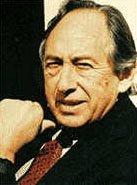
As some folks know, our Chicago Third Wave Study Group started 12 years ago reading 'The Third Wave' by the Tofflers. We agreed the book was critical to understanding the crisis in socialism and understanding the dangers and promises ahead flowing from the revolution in production wrought by computers. While we have our own critique of the Tofflers, we still believe there is much to be learned from them. Their latest book is entitled 'Revolutionary Wealth.' --Carl Davidson
'History Does Not Follow Straight Lines'
China People's Daily Interview
with Futurist Alvin Toffler
[Alvin Toffler is one of the world's best-known futurists and social thinkers. His books, such as Future Shock, The Third Wave and Powershift, continue to be read in more than 50 countries. They have drawn comment from and have affected the strategic thinking of leaders from around the world and have significantly influenced contemporary thought about the information revolution, social transformation and the speed of change. Toffler works in close intellectual partnership with his spouse, Heidi Toffler, who has co-authored many of his works. His new book Revolutionary Wealth was published in Chinese a few months ago and soon has became a bestseller in Mainland China. Recently Yong Tang, People's Daily Washington-based correspondent, did a face-to-face interview with Mr. Alvin Toffler.]
The Third Wave, an influential book in China
Yong Tang: When did you visit China for the first time?
Toffler: My wife and I went to China for the first time on January 1, 1983, shortly after we finished writing The Third Wave, and we produced a television program based on our book. We lectured at the Chinese Society for Future Studies, which was a branch of the Chinese Academy of Social Sciences. We also showed the television program. And then we left. Two years later we were on our way to Paris for a conference, and I was reading the French magazine L'Express. It said the best selling book in China after the speeches of Deng Xiaoping was The Third Wave.
Yong Tang: So you were surprised?
Toffler: Yes, very surprised.
Yong Tang: You might get a lot of royalty!
Toffler: Yes, but we got zero royalty. (Laugh)
Yong Tang: Did you authorize any Chinese publishing house to publish your book The Third Wave?
Toffler: No, we hadn't authorized anything.
Yong Tang: So it was pirated!
Toffler: Yes, exactly! (Laugh) But I believe it was pirated at the wish of the Politburo. (Laugh)
Yong Tang: Anyway your popularity was increased tremendously in China.
Toffler: Yes, we are not sorry, we are happy because we think the book helped promote reform in China.
Yong Tang: Some popular terms in Chinese society even came directly from The Third Wave. Do you know how influential you are in China today?
Toffler: We know when we come to China. We have been to China probably half a dozen times. We were in China about two years ago. People came up to us and told us that they can still remember bicycling ten miles to watch The Third Wave television program. Even now, they say to us 'You changed China'. I say the book and TV program may have had some impact, but China has been around for five thousand years.
There's a funny story about that. Before leaving America, I told Heidi not to bother bringing the television cassette to China because I thought it would not be shown and nobody would see it. She said don't be stupid! It will be seen at the top! And apparently it was. (Laugh)
No country can wipe off poverty overnight
Yong Tang: In The Third Wave you said China was a complex society with three distinct groups in it: First Wave rural people who are basically farmers, Second Wave urban people who work in factories and other traditional industries, and now Third Wave people who are involved with or use information technology.
Toffler: When I visited China in 1998, I was told by the Chinese State Planning Commission that there were 10 million people who belonged to The Third Wave category. That group has vastly increased since then.
Yong Tang: What is your updated estimate today?
Toffler: I don't have the number but obviously there are many millions more people in The Third Wave sector today. Look at how many Chinese people are online now and use computers and cell phones.
Yong Tang: As you may know, the gap between the city and the country is growing rapidly in China today.
Toffler: The State Planning Commission gave me numbers in 1998. They said in China there were 900 million First Wave people, 300 million Second Wave people and 10 million Third Wave people. But obviously things are accelerating and going much much faster now. The gap between the countryside farming population and the industrial population is very large now. The gap between the Second Wave population and The Third Wave population is increasingly larger also, not just concerning income, but also about lifestyle, values and everything else. Just look at China's young people.
Yong Tang: So it is tremendously unbalanced, isn't it?
Toffler: But that is inevitable. The same thing happened during the Industrial Revolution in England which produced a widening gap between city people and country people. Back then they had only two groups to deal with. The situation is much more complicated in China today because there are three groupings.
These groups have very different interests. The farming population wants the highest possible price for food. The urban industrial population, not surprisingly, would prefer the lowest possible food price. The Third Wave population has its own concerns. Tensions like these are present in every country, not just in China. But in China everything is in such a gigantic scale. It is harder to deal with these tensions. New waves of change always bring new tensions. The question is how you prevent those tensions from getting out of control.
Yong Tang: Can China go directly from the First Wave to The Third Wave by leapfrogging the Second Wave?
Toffler: There are small countries which can do that. But a country with a population of China's size may have a very hard time doing that. In our new book, Revolutionary Wealth, we talk about transforming agriculture, dealing with poverty not just in China but everywhere by advancing to what we call 'hyper-agriculture'. Hyper-agriculture is on the horizon. It will use advanced technology and can be highly productive. It doesn't just produce food. It also produces energy and high-value added materials for many other products. But it requires an educated workforce.
I don't believe you can wipe out poverty quickly and immediately. No country can do that overnight. What you can do is educate the current generation of farm children in new ways, and begin the search to see if technologies that are created for other purposes can also be modified for use in agriculture. We have medications designed to treat one disease which often can also, alone or in combination, prove effective against other illnesses.
Yong Tang: Yes, many Chinese farmers today are beginning to use advanced technologies like cell phones. Even my parents who are in China can talk with me via a cell phone when they are still working in the fields. It is quite amazing.
Toffler: Cell phones are a technology used in agriculture, but the ones we write about in Revolutionary Wealthare much further advanced. We know how to produce genetically modified food which will carry vitamins and medications. We write about the possibility of implanting sensors in plants so that each plant could tell you when it needs water and nutrition. You can link those sensors to satellites which could tell you where you should apply custom-made fertilizers.
That is just the beginning of ways to take agriculture technologies to a very high level. Today's rural children will grow up in a world in which agriculture will have become one of the most advanced industries. But all that requires education and government cooperation. It is not easy and it is not immediate. It may take decades.
Yong Tang: But in my hometown the way of doing farming is still very primitive. Most of the work is done by hand. In the foreseeable future the farmers just can't afford to such expensive high technology.
Toffler: I understand that. But the first step is to undertake research into new technologies useful for agriculture. Technology by itself cannot solve the problem of poverty, but poverty in the fields cannot be solved without technology.
Timing the most difficult thing in forecasting
Yong Tang: You made a number of major predictions in the 1970s and 1980s. So far what predictions have been proven wrong?
Toffler: I don't like the word 'prediction'. It suggests certainty. And nobody knows the future with certainty. We can, however, identify ongoing patterns of change. 'Forecast' is a better word.
So which of our forecasts have not occurred? In our first major book, Future Shock, published in 1970, we said that there would be cloning of animals and human beings by 1985. That was the best guess given to us by a leading Nobel Prize-winning biologist. We based this estimate on him.
From this experience, I learned that the most difficult thing in forecasting is the timing. You can say something is going to happen, but it is very hard to say precisely when. In that book we also wrote about throw-away products. We said people might someday wear paper clothing. Everybody said it didn't happen. And they are right. But in my suitcase I still carry a little tiny plastic package with paper underwear in it. I have carried that paper underwear around since the 1970s. (Laughing) But of course paper clothing never became a major product.
On the other hand, when people tell futurists they missed a forecast, we can always say, 'It hasn't happened -- YET.' So we may be wrong about paper clothing, but in that same book 36 years ago we forecasted cable television, video recording, virtual reality, changes in family structure in the United States (family size becomes smaller and smaller), and many other things that did happen. Most important, was the correct central theme of Future Shock -- that change was going to accelerate in the decades ahead. And that has certainly happened -- no where more so than here in China.
Yong Tang: After The Third Wave, you forecasted that mankind would move to other planets in the universe and that is what you call the Fourth Wave.
Toffler: Right. Actually, we believe the fourth wave will involve both a combination of biological advances and digital technology, and a serious movement into space.
What will be remembered about our lifetime one thousand years from today? They will look at our society as primitive and stupid and ignorant. But one thing they will remember is that we are the first society in human history to create wealth beyond our planet. I believe the next generation or two will see enormous increases in human activities in space. Combined with other changes, you will have a Fourth Wave society.
Yong Tang: Do you mean everybody could move into space or just the wealthy?
Toffler: No, I am not necessarily talking about people. Maybe that can also happen. We can use space technology to solve problems and create wealth here on Earth, as well. China has a very ambitious space program. I am planning another trip to China, and hope I can witness an actual Chinese space launch.
My impression is that the Chinese space program is extremely ambitious and involves many, many different projects. The question is whether the money will be there to carry out all of those programs.
Global wealth map to undergo dramatic changes
Yong Tang: In Revolutionary Wealth, you forecast that the global wealth map will undergo dramatic changes in favor of Asia and that Asia may become the dominant economic force in the world. Why are you so optimistic about Asia, and not very optimistic about Europe?
Toffler: That's correct. We are not optimistic about European development.
Yong Tang: But the European Union is becoming bigger and bigger?
Toffler: In my opinion, the European Union is also becoming weaker and weaker. (Laugh) It still believes that progress is about factories and it remains focused on Second Wave development. Third Wave development is often most evident in the smallest countries, such as Finland, Ireland, Slovakia. All the big countries in Europe are falling behind.
In 2000, European leaders met in Lisbon and announced that by 2010 Europe would be the greatest and most competitive information-based economy in the world. Then in 2001 the EU reported that not much had been done toward fulfilling this goal. The EU said the same thing in 2002, 2003, and so on. Each year it got worse and worse. In 2004, Germany's chancellor finally declared the Lisbon goal 'unrealistic'. One might even say that Europe is techno-phobic, while Asia, if anything, is techno-philiac.
Yong Tang: Just like America?
Toffler: Yeah, even more so. In Singapore Lee Kwan Yew changed Singapore from a backward port city to an advanced economy. When Malaysian leader Mahathir Mohamad took office, the primary products of his country were tin and timber. By the time he left office, it was semiconductor chips. South Korean under Kim Dae-jung became one of the most advanced IT economies in the world. In China there is a policy, which I trace to Deng Xiaoping, to try to become a Third Wave country. That is why our book The Third Wave sold so many copies in China. So, many Asian countries have had remarkable leaders who understood the importance of the IT industry, science and high technology generally.
Yong Tang: Maybe America will do better than Asia in the future?
Toffler: Very possibly. America has enormous cultural and financial resources, and is filled with entrepreneurs. In fact, China would not have achieved its current global position without America.
To understand why, we need to look back to the mid-1950s, when today's revolutionary economy was just beginning in the U.S. In 1956, Soviet leader Khrushchev said, 'We will bury the West' -- a famous quotation. But in fact the revolution was already starting and nobody knew it.
At the time, I was here in Washington DC as a journalist covering Congress and the White House. The first mainframe computers were just beginning to migrate from the military and government into the business world. In 1956 very few people had television at home. If you wanted to watch television, you went to a bar. But within five years virtually everybody had a television set in his or her home. In addition, commercial jet aviation was introduced, shortening the time it took to fly across the country.
Then on my birth date of October 4, 1957, Russia launched Sputnik, the first satellite. That led the U.S. into the space program. Washington made enormous investments in research, development, education and science. To carry out the space program, it required the integration of huge, complicated projects involving thousands of vendors and companies. You have to learn how to create and manage temporary organizations around specific problems. That is how the idea of systems came into being. Today we routinely think about systems, sub-systems, and interactions among systems. That came out of our experiences with the space program, and it subsequently had major impact on how American companies re-designed themselves.
In that period, you also got rock music, new styles of literature and Hollywood movies that starred anti-heroes rather than heroes. Meanwhile, the Internet was created by the Pentagon to protect communications in case of a nuclear attack from the Soviet Union.
Later, as computer use spread and the IT industry exploded, American companies began to outsource component manufacture and chip-making to Japan. Partially as a result, the Japanese economy grew quickly. Japan began to invest outside Japan -- in South Korea, Taiwan, and Malaysia. Eventually, investments reached China. And all these investments can be traced back, directly or indirectly, to the coming of the Third Wave and the development of the computer industry in the United States.
China's future
Yong Tang: What do you see as the likely future for China?
Toffler: I would be cautious in making a forecast.
Much of what is written about China in the world outside its borders is based on simplistic projections of ongoing trends -- and, too often, on false or inadequate data. If you read a forecast based on straight-line projection, you should always question it, because history does not follow straight lines. And neither does the future. I can still remember when, a few years ago, The Economist magazine had a cover story entitled 'China Superpower 2020'. That became a clich¡§| in the West. It implied that China was on a straight-line course to becoming the world's most dominant nation. But it is far too simple and naive to think about the straight-line development. China, like everywhere else, will undoubtedly experience dramatic ups and downs in its future. That might include internal conflict.
In the past, China followed a 'city-first' policy designed to extract capital from the First Wave sector to finance Second Wave, urban industrial development. In fact, that was what also happened after the Communist revolution in Russia when Lenin, and especially Stalin, came to power. I think a major problem facing the Chinese leadership is how to prevent 'wave conflict', not just between the countryside and the city, but also between The Third Wave sector and others.
During the Industrial Revolution, England also faced wave conflict between the countryside and the people who wanted to develop the cities. In the United States during the 1860s there was a civil war between the technologically more advanced and industrializing North and the backward, slave-based South. It was the worst war in human history in terms of causalities. The north won and that is why we became an industrial power. If the north hadn't won, industrialization would have taken much longer.
So where you have waves of change, you have conflict. The question is how do you manage that conflict so that it doesn't become violent. That is the question facing China today. Your police departments reported 87,000 violent protests last year. So wave conflict is a serious issue for China.
Information technology's role
Yong Tang: How can information technologies like the Internet and blogs change the society?
Toffler: It may become more and more difficult for the government to control communications. The opening up of the Internet and cell phones will rapidly change every country, especially those countries in which communication is underdeveloped or deliberately limited by the government. Cell phones are changing the relationships of parents to children. Children talk via cell phones using languages their parents even don't know. They use coined words or abbreviations. It is changing politics as well. In the United States there is a group of people who used the Internet to raise money for Democrats in the last campaign. Democrats use the advanced technologies, but their ideas are still too old, going back to the Roosevelt era.
Yong Tang: Is that why Democratic presidential candidates can't win elections?
Toffler: It is said that the Democrats can win only if the Republicans shoot themselves. (Laugh). And the Republicans are working hard to shoot themselves right now. Personally I feel the political discussion in the United States right now is very backward. There is still no widespread political recognition of the conversion to the knowledge-based economy. They are still using political ideologies traceable back to the 1930s.
Yong Tang: How will information technology influence international relations?
Toffler: The speed with which China and Asia in general adopted cell phones; computers and other IT technologies came as a shock to the United States and the West. There was an arrogant assumption on the part of many in the West that the West is always ahead in technology, but they suddenly discovered that this is not always the case. The future power of a country will be heavily determined by technologies.
Yong Tang: Two American professors recently claimed that America has gained nuclear primacy, thus making the Mutually Assured Destruction strategy unworkable. America could destroy Russian long-range strategic nuclear forces in a first strike. Is the possibility of a nuclear war larger than ever before?
Toffler: The possibility of a nuclear war of that kind is 0.00000001. I don't think that is going to happen. I think war starting in some other ways and in other parts of the world could, however, escalate into nuclear conflict. And if terrorists or a terrorist regime acquires nuclear weapons, all bets are off.
Yong Tang: So human race will not destroy itself in the future?
Toffler: If there were a serious conflict over Taiwan that leads to the involvement of other countries, then you could have something like a world war or a gigantic regional war. That could lead to irresponsible use of weapons of mass destruction, not just nukes. So the anti-proliferation regime is extremely important. I wish China would take stronger steps to persuade North Korea and Iran not to have nuclear weapons.
Yong Tang: How do you think jobs will change in the future? Will all the work be done at home?
Toffler: We wrote in the 1980s that more and more people would work at home. When we wrote that, people said it was impossible and crazy. Two years after that, The New York Times ran a story on its front page saying the idea of working from home was far-fetched. Several years later it ran an article on page one in the exact same location. This story said, as if it was a new idea, that people were indeed working at home. (Laugh) Technologies make it highly productive to work from home. Many jobs don't require daily face-to-face interaction with other workers.
When I wrote about what I called the 'electronic cottage' -- working from home -- in the 1980s and went to Japan to talk about it with Japanese people, they said, well, maybe in America, but never in Japan, because our homes are too small. Now the Japanese government has recently announced that by the year 2010 it expects to have 20 percent of the entire workforce working at home. One out of every five Japanese will work at home if they carry out their mission. I think the trend is going to spread and it is going to change the nature and size of homes and change family relations in Japan. For example, women can work and take care of their kids at the same time. There was a joke in the United States that 'IBM' meant, 'I've been moved'. A company sent you from Detroit to Denver and you moved your family and then you moved to somewhere else. That will be less and less common since IT and digitalization make it possible for many jobs to be done anywhere at anytime.
Yong Tang: Do you work at home?
Toffler: Of course, always.
Yong Tang: So you don't need a car?
Toffler: I own a car because I like to get out of the house. I use it every day. I am a strange character. I am not a typical American. Because I work at home I have a disease called 'Cabin Fever'. Americans know that term. It means people need to get out of the house frequently. I actually go out three times a day to eat my meals in restaurants. My wife is a great cook, but I like to get out of the house. Even when I was in Washington DC as a reporter covering Capitol Hill, I did interviews like you do, and then I would go home to write my story. So I always work at home.
Yong Tang: How will education change in the future?
Toffler: The present education system in the U.S. and the West, and probably in China as well, is a system designed to create factory workers. If you look at mass education in the United States in the 1800s, some parents sent their children to school while some kept their children in the fields. When rural people came into the cities, companies needed workers for their factories. But what they got were workers who were born on farms and grew up in rural circumstances. Employers soon came to the conclusion that these workers were not efficient. They came late or they took many days off. That might not mean much in the field, but it means a lot in a factory. A single worker coming late to the assembly line could force hundreds or even thousands of other workers to stand around waiting. Companies began to demand that schools create what they called 'Industrial Discipline'. Even today, we have schools modeled on that. Children must be in school on time. They must do rote and repetitive work.
Now the economy is different. We need a new education model. We need to raise difficult questions. Should you compel all kids to start school at the same age? Perhaps some kids should start school at four or five, some at seven. Some attending classes in the morning, others in the evening. Students need alternative courses and different ways of working with each other. There will be a very noisy, loud and painful debate about whether we should even have compulsory education.
Also, we need to recognize that not all important learning takes place in a school. For example, when I bought my first computer in 1976 or so, I needed a 'computer guru' to teach me how to use it. Who, in those days, was a 'guru'? The answer was, anyone who bought the same machine one week before I did. He was more experienced than I was, and could teach me. A month later, I might know more than my 'guru'. So I would teach him. What you have in the U.S. is about 150 million people who can use a computer, but never went to school to learn how. Education, but no school!
We need to rethink the most basic assumptions about education. I was impressed when I visited a school in Tokyo. Ten-year-old kids were learning higher mathematics. But I was depressed by one thing: they left there at 10:30 at night and started at 8:00 o'clock the next morning. Is that a good school system? The answer is it may make kids smart but it doesn't make them happy or creative. We will encourage creativity because the country which is most creative will become the most economically successful.
Yong Tang: Do you think environmental pollution and energy shortages will be solved in the future? How do you think transportation mode will change in the future?
Toffler: There is no shortage of energy, it is a shortage of brains. We can get energy from the moon or the sea or the sun. The question is how and at what cost. It is also political. Big oil companies and oil-rich nations don't want to change. The issue could be solved by human effort and by applying brains and political will. I don't believe we are going to run out of energy.
Yong Tang: Some have said futurists are just like salesmen who are trying to sell new ideas. Someone has also claimed that futurists are like God or Jesus in your heart. How do you think of those comments?
Toffler: I certainly don't feel like GOD. (Laugh). First of all people who say that don't know what a futurist is. People who say that are themselves futurists and don't know it. For example there are 6 billion futurists on the planet. Everyone is a futurist. Stop and think. You are thinking this interview will end pretty soon and you will go to attend another meeting. It is a forecast. You drive your car and you are forecasting that cars alongside you will not swerve and collide with you. Everybody is making forecasts every moment of every day. This week an article appeared on Science magazine. It said even apes forecast and look ahead.
Futurists are those who think about the world or an aspect of the world over a longer term, not the next ten minutes or the next day. Heidi and I don't own a crystal ball. What we do is we read everything we can. We try to read materials from outside the United States. We travel and talk with people who are making changes and inventing things. We collect information from them. Then we decide what is important and what is not, and then we write a book. We don't believe we have some kind of religious magic. Nothing we write is certain or secure. As far as I am concerned, anybody who claims to 'know' the future with certainty is what Americans call a quack -- someone not to be taken seriously.
Yong Tang: I know you have a company. Who are your clients? Do you have any Chinese clients?
Toffler: We have a consulting company called Toffler Associates. We work with a lot of telecommunications companies like Verizon. We work with NGOs. We work with Boeing and NASA.. We have business in Latin America, Brazil, Singapore, but not in China. Not yet.
Yong Tang: Do you know of a Chinese futurist whose name is Wang Xiaoping? She is a young girl in her 20s. Her book Second Declaration is quite popular in China. The main idea is that human society may evolve from monkeys to human beings to immortals. Someone said she is the Chinese version of Alvin Toffler.
Toffler: No, I don't. I would like to see the translation so I could read it. If she is saying we are not at the final stages of evolution, that there is further evolution, I think it is correct. But I don't know if she is correct.
Yong Tang: Your wife Heidi is also a futurist?
Toffler: Yes.
Yong Tang: It is very unusual. The wife and husband working in the same profession.
Toffler: In part, we invented the profession. (Laugh).
Yong Tang: Why did you decide to marry a lady who is also a futurist?
Toffler: Well, we got married years before we began writing about the future. My wife is brilliant. She and I argue and fight about ideas all the time. We have been doing this over the years. It is healthy arguing. We have been married for 56 years. We share the same values and we share the same information, but we don't always agree with the interpretation of that information.
Yong Tang: I know you two have different interpretations of the fourth wave?
Toffler: She emphasizes space a lot and I think she is right.
Yong Tang: Don't you feel angry or uncomfortable with arguing?
Toffler: Not at all, just the reverse. I am proud of her and I am proud of me being proud. (Laugh) She is a terrific lady and I have learned a lot from her, as she has from me.
Yong Tang: Most of the time you will accept her suggestions?
Toffler: She will accept my argument and I will accept hers. If I don't agree with her, I won't write it. At the same time she may very well persuade me. We go back and forth. It is a very helpful process. We have been arguing for 56 years but we still love each other. I miss her and she misses me and we love each other like kids.
Yong Tang: You were once a reporter with Fortune magazine?
Toffler: They called me an associate editor, but I was a writer and columnist. I was there for 2 ? years. That was a very valuable period because it gave me my introduction to business issues. If you asked me what my profession is, I would say I am an author and writer first, and secondarily I am a futurist. I have wanted to be an author and writer since I was seven years old.
Yong Tang: Being a futurist is profitable?
Toffler: Books can be profitable for writers -- unless they are pirated. And we have been pirated in many countries, including China. (Laugh)
Yong Tang: Probably not now? Now China has a relatively much stronger intellectual property protection than it had 20 years ago.
Toffler: I hope that is true.
Yong Tang: So I am sure your new book Revolutionary Wealth may sell even better than The Third Wave. Then you could make more money.
Toffler: I hope that many Chinese will get a chance to read Revolutionary Wealthand see the future in a new way.
By Yong Tang, People's Daily correspondent based in Washington, DC
People's Daily Online --- http://english.people.com.cn/
Read more!
Thursday, July 13, 2006
Help the HotHouse
Here's a Draft Letter, posted in the comments, for those interested in helping Chicago's HotHouse through its current crisis. The list of signers, as of the time it was deliverd to the Board yesterday, is posted down in the comments--Carl Davidson Read more!


